

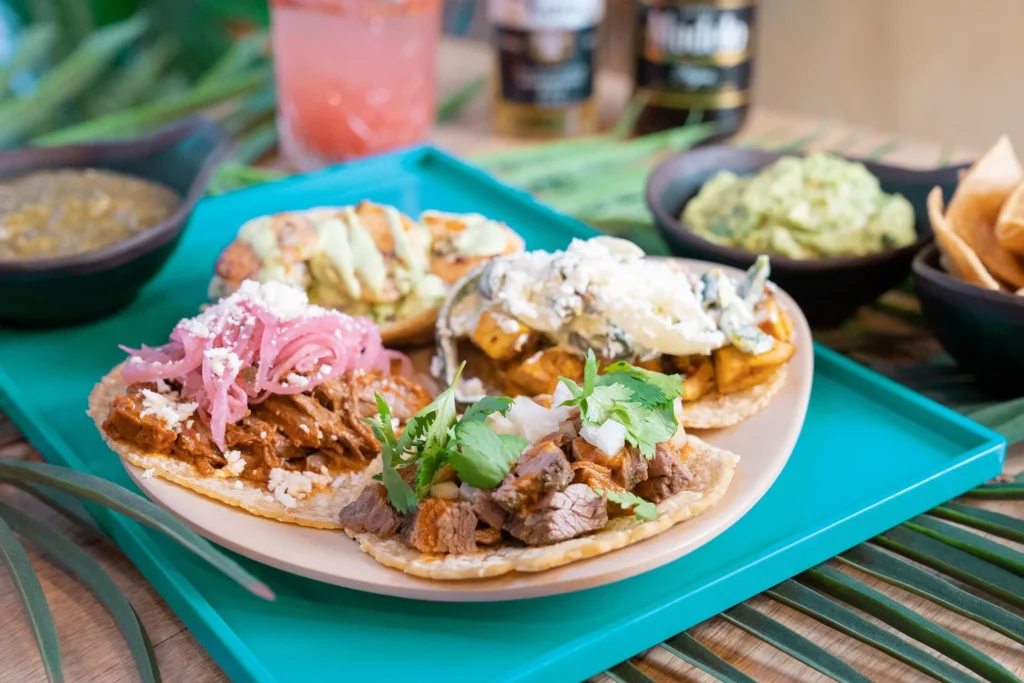
If you’ve ever ordered carnitas and been handed something dry, stringy, or weirdly sweet, you’ve eaten shortcut carnitas. Real carnitas — the kind that takes most of a day — is one of the great pork dishes in the world, and it’s one of the hardest to fake.
Here’s how we make it.
The Cut: Pork Shoulder, Bone-In
Pork shoulder (also called pork butt, or Boston butt — none of these names describe where the meat actually sits on the pig) is a tough cut with a lot of connective tissue and intramuscular fat. The fat is the point. The connective tissue is the point. Both break down slowly under heat and turn into the richness and crispness that make carnitas what it is.
We use bone-in shoulder because the bone adds flavor to the rendered fat and gives us something to pull against when we’re shredding at the end. Boneless works, but the finished product is slightly less interesting.
The Fat
Traditional Mexican carnitas is cooked in rendered lard. Not simmered in water. Not braised in broth. Submerged in melted pig fat and cooked slowly, like a confit, until the meat is so tender it falls apart under its own weight.
The lard matters. Industrially rendered lard, the kind you buy in a plastic tub at the grocery store, works but tastes neutral. Lard rendered from the trimmings of the pork shoulder itself — which is what we do — adds another layer of pork flavor to the final dish. It’s the same ingredient reinforcing itself.
We start every batch by cutting the fat cap off the shoulder, chopping it into small pieces, and rendering it slowly in a wide pot over low heat for about two hours. The result is clear, pale fat that smells intensely of pork. That’s our cooking medium.
The Seasoning
Carnitas doesn’t want much. Over-seasoning is one of the common mistakes.
Our rub is: salt, cumin, Mexican oregano, bay leaf, orange zest, and a little milk. The milk sounds strange but it’s traditional — it adds a subtle sweetness and helps the meat brown at the end. Some kitchens use Coca-Cola or orange juice for the same effect. We use milk and a strip of orange peel because it’s what we grew up on.
No garlic. No chili powder. No “carnitas seasoning” from a packet. The flavor of real carnitas comes from the pork, the fat, and the slow heat — not from a dozen spices competing for attention.
The Cook: 12 Hours, Three Phases
Phase one (4 hours, low submersion). The shoulder is cut into roughly 3-inch chunks, salted and seasoned the night before, and dropped into the rendered lard at around 275°F. For four hours, the meat just cooks gently — the fat and connective tissue start to break down, the meat releases juice, nothing is browning yet.
Phase two (6 hours, slow deep). Temperature drops to 225°F and we let it sit. This is the long slow surrender. The meat becomes so tender you can push a wooden spoon through it. The fat has fully melted into the pork fibers. If you stopped here, you’d have excellent slow-cooked pork, but it wouldn’t be carnitas yet.
Phase three (2 hours, the final crisp). This is the step most home cooks skip and that most restaurant kitchens get wrong. We raise the temperature, pull the meat out, chop it roughly, and return it to the pot in smaller amounts to brown the exterior in the hot rendered fat. The outside turns crisp and dark; the inside stays soft. The orange peel caramelizes. The milk hits the hot fat and adds that distinctive carnitas aroma.
This is where you cross from “slow-cooked pork” into “carnitas.”
What Goes Wrong When People Rush
The most common carnitas failure is: cooked too fast, in water or broth, with the “crispy” done by broiling at the end. This gives you shredded pork that looks right but tastes dry. The fat never fully rendered. The connective tissue didn’t break down. The crisp is surface-only, with no interior tenderness.
Second most common failure: too much seasoning early. The salt pulls moisture out before cooking; the pepper burns at low temperatures and goes bitter; the garlic turns acrid. Flavor stacked up top ends up tasting flat.
Third: the final crisp done in a pan instead of in the cooking fat. If you fry carnitas in a dry pan at the end, you lose the integration between the fat and the meat. The crisp is harsh instead of unctuous.
Why We Do It This Way
12 hours of cooking for a $4.50 taco doesn’t make obvious business sense. We’d be more profitable buying commercial pre-cooked carnitas from a food-service supplier (and plenty of taco shops do that). We’d save eight hours of kitchen labor per batch. We’d lose the thing that makes our carnitas distinct.
We think it’s worth it. The customers who notice are the ones who become regulars. The ones who don’t notice still get a better taco than they’d get elsewhere; they just don’t know why. Either way, it’s the recipe, and we’re not going to shortcut it.
When to Order Carnitas
Any time. It’s always on. But if you want to taste it at its best, come in on a Tuesday or Wednesday afternoon, between the lunch and dinner rushes. We cook a new batch each morning, and by 2–3pm the first batch has had time to settle at its peak texture — crisp outside, melting inside, still warm.
Pair it with a cold agua fresca de jamaica. The tartness of the hibiscus cuts the richness perfectly.
Carnitas taco: $4.50. Or three on a plate with rice and beans: $13.50. See the full menu, or come visit at 31 W 52nd Street.
